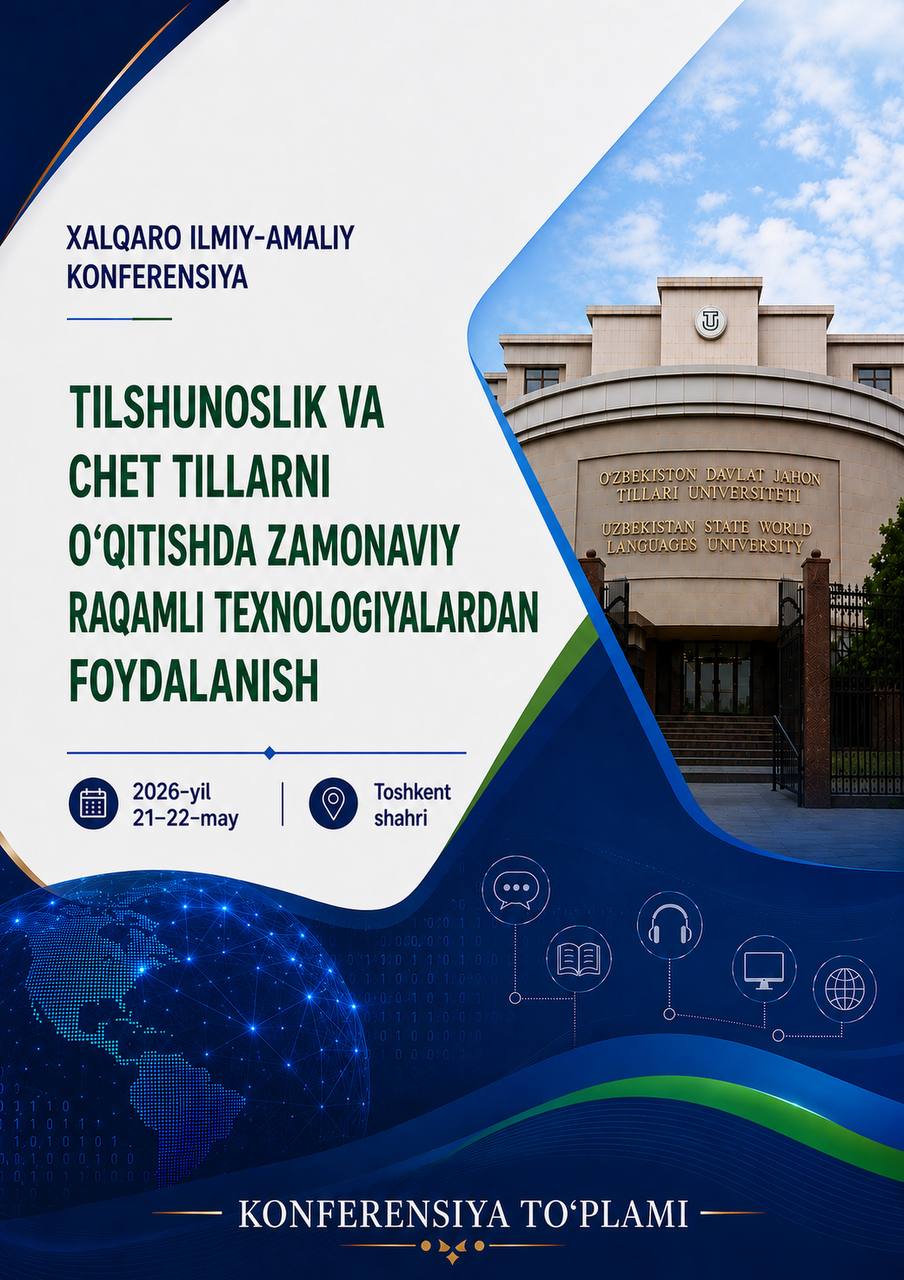
METHODOLOGY FOR USING DIGITAL TOOLS IN ACADEMIC WRITING AND SCIENTIFIC RESEARCH
https://doi.org/10.5281/zenodo.20536254
Kalit so‘zlar
Academic writing, Digital tools, Google Docs, Writing strategies, Student engagement, Motivation, Writing proficiency, Higher educationAnnotasiya
This study examines the role of digital technologies in academic writing, highlighting their importance due to limited research on students’ writing processes and concerns about writing quality. It shows that students use various tools and resources to manage their writing more effectively. The study also explores factors influencing the acceptance of digital tools, emphasizing motivation, usefulness, and ease of use. Additionally, findings from collaborative writing with Google Docs reveal improvements in overall writing, especially in task response and vocabulary, while grammar and coherence show less progress, with students experiencing both benefits and challenges.
Foydalanilgan adabiyotlar ro‘yhati
Bailey, S., & Withers, A. (2018). Academic writing: A handbook for international students. Routledge.
Ching, Y. H. (2018). Exploring the role of digital tools in academic writing. Educational Technology & Society, 21(3), 210–222.
Iqbal, S., et al. (2021). The impact of digital technology on academic writing and research. International Journal of Educational Technology, 18(2), 55–70.
Lea, M. R., & Jones, S. (2011). Digital literacies in higher education: Exploring text practices. Studies in Higher Education, 36(4), 377–393.
Strobl, C., et al. (2019). Digital support for academic writing: A review of technologies. Computers & Education, 135, 33–48.
Purcell, K. (2013). The impact of digital tools on student writing and learning. Pew Research Center.