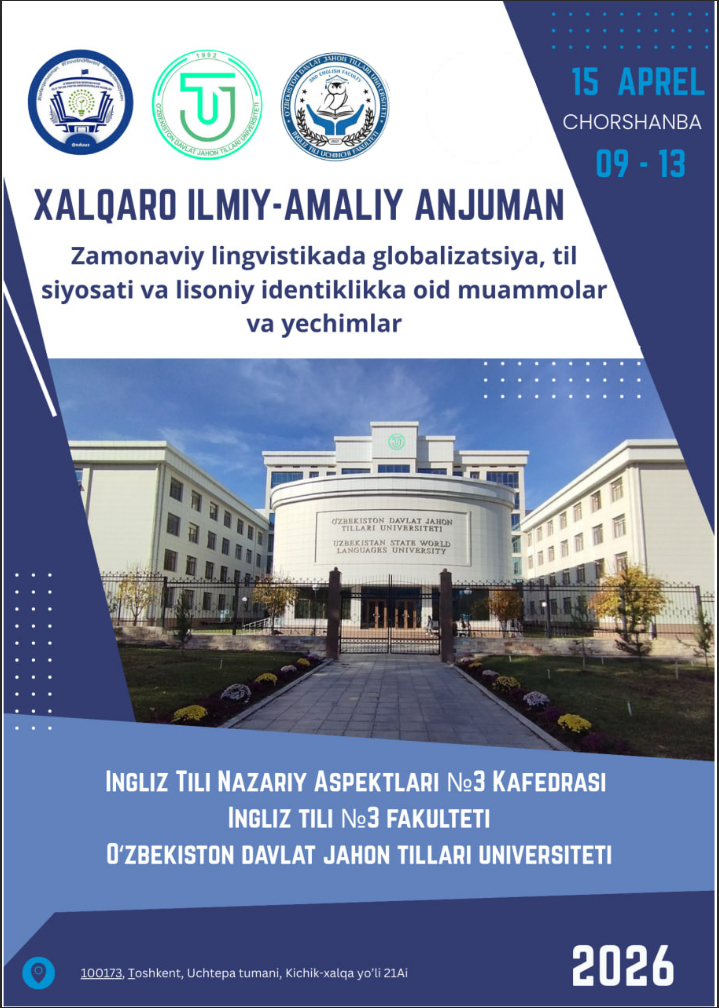
THE IMPACT OF ENGLISH AS A LINGUA FRANCA ON MINORITY LANGUAGES IN UZBEKISTAN
https://doi.org/10.5281/zenodo.20006461
Kalit so‘zlar
linguistic globalization, lingua franca, minority languages, language policy, Uzbekistan, linguistic identity, cultural heritage, sociolinguistics.Annotasiya
This article provides a comprehensive analysis of the impact of English as a global lingua franca on the future prospects of minority languages within the multi-ethnic linguistic landscape of Uzbekistan. The research scientifically explores the growing inter-linguistic competition, processes of linguistic assimilation, and the shrinking functional domains of local languages in the era of digital globalization. It highlights how the prestige associated with English among the younger generation poses challenges to the intergenerational transmission of heritage tongues. The author puts forward several practical recommendations for preserving linguistic diversity, maintaining a balance between global integration and national identity, and enhancing the cultural and educational status of minority languages.
Foydalanilgan adabiyotlar ro‘yhati
Crystal, D. (2003). English as a Global Language (2nd ed.). Cambridge University Press. doi.org
Hasanova, D. (2007). Teaching and learning English in Uzbekistan. English Today, 23(1), 3–9.
Smagulova, J., & Alisharieva, A. (2021). Multilingualism, nation branding, and the ownership of English in Kazakhstan and Uzbekistan. Journal of Multilingual and Multicultural Development. doi.org
Ministry of Higher Education, Science and Innovation of the Republic of Uzbekistan. (2024). On measures to further improve the system of teaching foreign languages. Official Decree Archive.
Phillipson, R. (2009). Linguistic Imperialism Continued. Routledge.